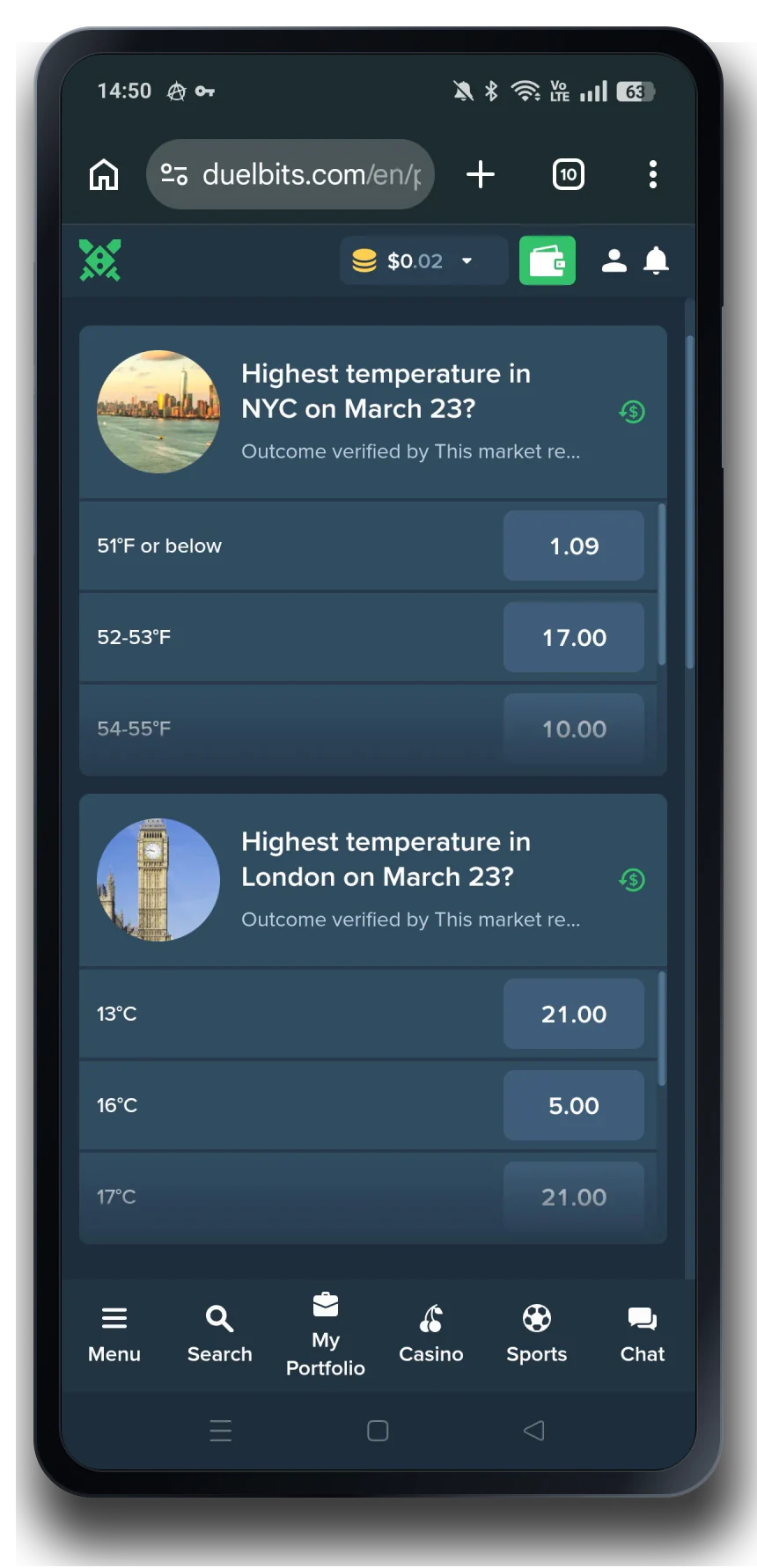
Registration is available by email or through Google, Steam, Telegram and MetaMask. The terms impose one account per player and prohibit sale, gifting, transfer or third-party use of an account.
Security measures and policies include:
- email verification;
- optional two-factor authentication;
- 256-bit SSL encryption claimed by the platform;
- wallet and withdrawal checks;
- automated crypto transaction screening;
- a responsible security-disclosure and reward programme.
The user remains responsible for account credentials and 2FA recovery information.
The Terms require immediate notice to support@duelbits.com after suspected unauthorised access. They also say the account holder is responsible for login credentials and 2FA. The public pages do not document passkeys, a withdrawal-address whitelist, an anti-phishing phrase, remote session termination or a login-history screen. These controls may change in account settings, but they are not confirmed by the published material.
Personal data and privacy controls
The privacy policy lists email, name, phone number, postal address, date of birth, passport or national ID, address evidence, Steam account information, crypto-wallet information and usage data as possible collection categories. Automatic usage data can include IP address, browser and device details, visited pages, visit times, unique identifiers and diagnostics.
The site uses session cookies, persistent preference cookies and third-party analytics or performance cookies. Personal data can be shared with processors for platform operation, analytics, advertising, contact and payment processing, and can be transferred during a corporate transaction. The policy says payment-card details are sent directly to third-party processors rather than stored by Duelbits.
Where GDPR applies, the stated rights cover access, correction, objection, erasure, data portability and withdrawal of consent. Identity verification can be required before a privacy request is completed. The policy does not promise immediate deletion because information can be retained for legal obligations, dispute resolution and enforcement.